

In the world of product design, some of the most meaningful ideas do not begin with spectacle. They begin with friction. A small pause at the supermarket entrance. A moment of hesitation between picking up a basket or pulling out a cart. A tired shoulder halfway through an aisle. A heavy trolley that refuses to turn smoothly. A cart left abandoned in a car park because returning it feels like one final inconvenience after a long shopping trip.
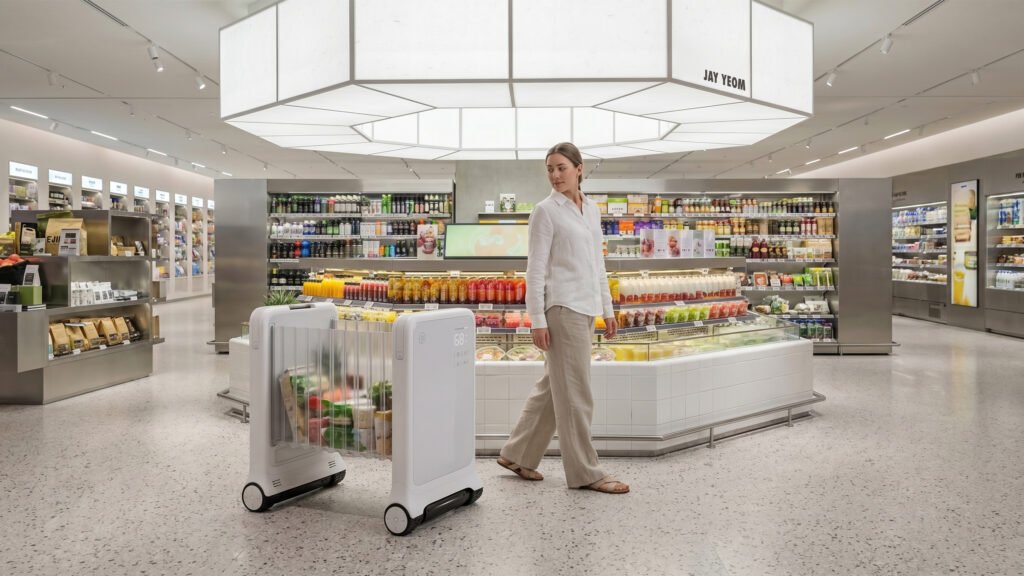
LEVION, designed by Jay Yeom, begins exactly there. It takes one of the most familiar objects in everyday retail life, the grocery cart, and asks a sharp question: why has something so widely used remained so physically demanding, spatially inefficient, and emotionally overlooked?
The answer is not simply to make the cart smarter. LEVION’s strength lies in the way it reframes the cart as a companion. It is not presented as a gimmick or a piece of technology forced into a supermarket setting. Instead, it is designed around the ordinary rhythm of shopping: entering, browsing, collecting, checking out, loading, and leaving. The project understands that a good retail object does not need to shout for attention. It needs to remove effort.
A Familiar Object, Rebuilt Around Human Fatigue
Traditional grocery carts are functional, but they are rarely thoughtful. Their form has stayed almost unchanged for decades because they perform the basic task well enough: hold items and move through a store. But “good enough” often hides small daily frustrations. LEVION identifies three key pain points. First, the customer has to decide at the entrance whether a basket will be enough or whether a cart is necessary. This decision seems minor, but it creates an avoidable interruption before shopping even begins. Pick a basket and buy too much, and the experience becomes uncomfortable. Pick a cart for a short trip, and it becomes bulky and unnecessary.
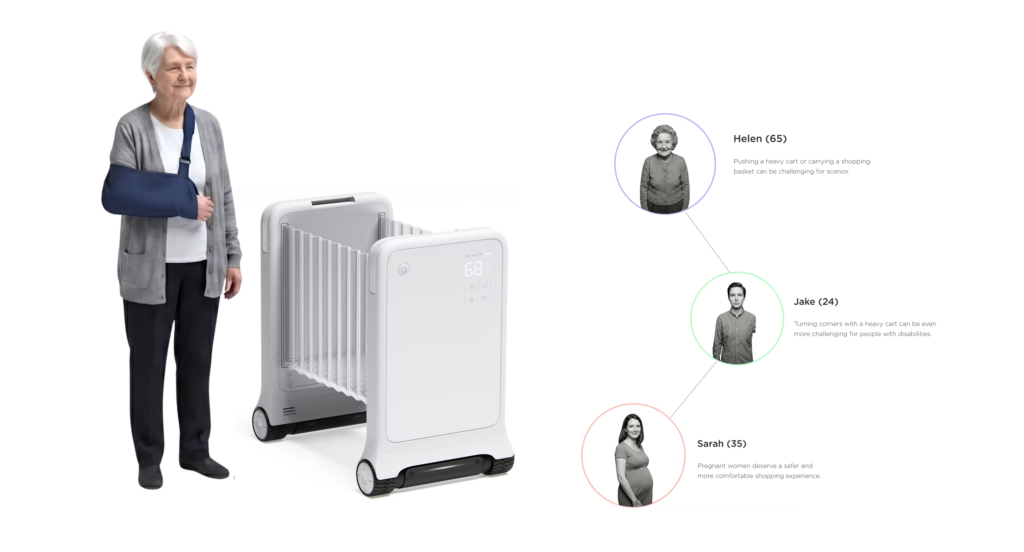
Second, the physical use of a cart becomes harder as it gets heavier. Turning, pulling, and manoeuvring through crowded aisles can quickly become uncomfortable. For older users, disabled users, parents, or anyone with reduced strength or mobility, this discomfort is not a minor issue. It can directly affect independence and confidence while shopping. Third, the act of returning carts creates a problem for both users and retailers. For users, it is an annoying final task. For stores, abandoned carts mean extra labour, visual clutter, blocked spaces, and operational inefficiency.
LEVION responds to these issues with a simple but ambitious idea: the cart should adapt to the shopper, not the other way around.
The Design Idea: Hands-Free Shopping
At the centre of LEVION is the idea of hands-free shopping. Instead of asking the user to constantly push and manage the cart, LEVION is designed as an autonomous grocery cart that follows the shopper. This changes the relationship between person and object. The cart is no longer something the user must control every second. It becomes a quiet support system moving alongside them.
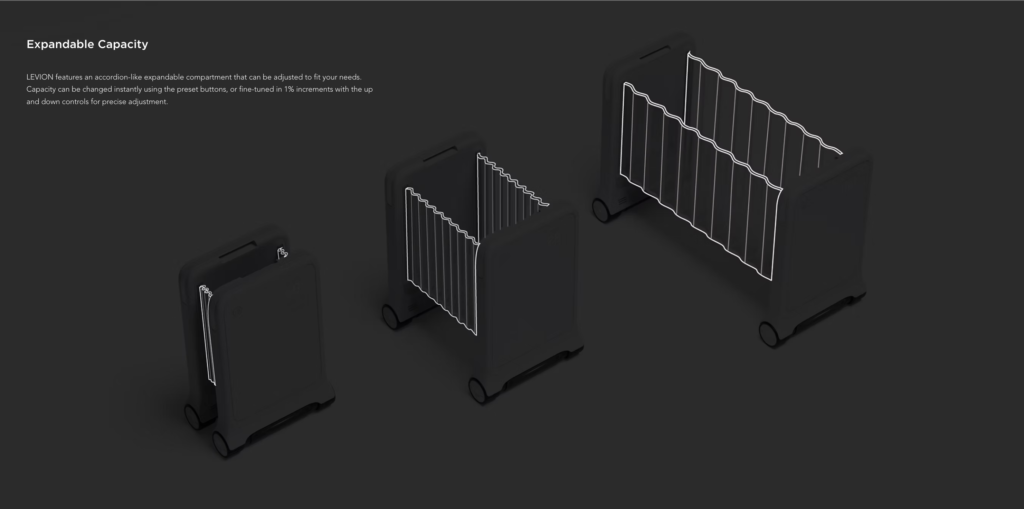
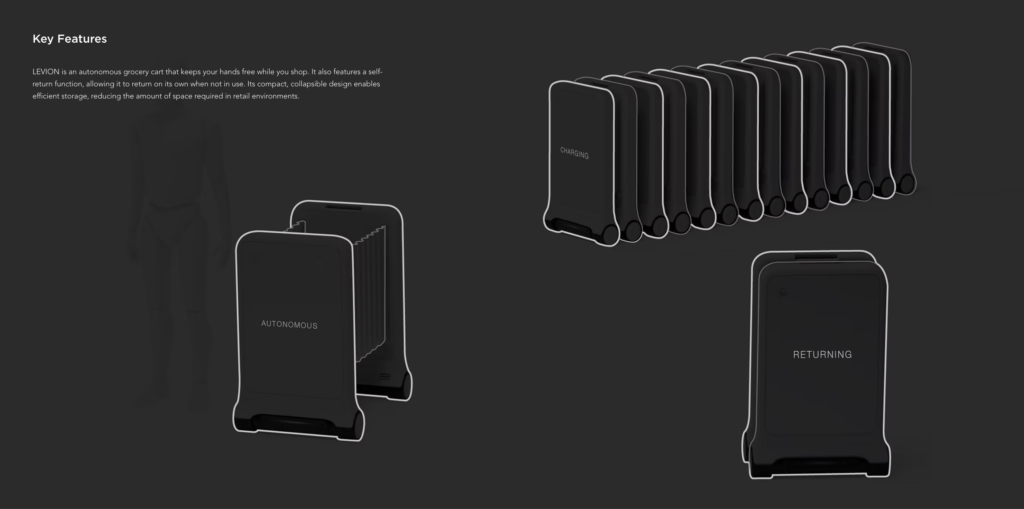
This is where the concept feels especially relevant. Shopping is not only about buying products. It is also about movement, posture, attention, and comfort. A parent may need one hand free for a child. An older shopper may find a heavy cart difficult to turn. A disabled user may experience extra strain while moving through aisles. LEVION reduces that effort without making the experience feel complicated. One of LEVION’s strongest design features is its expandable capacity. The cart uses an accordion-like compartment that can grow or shrink depending on the user’s shopping load.
This solves a common supermarket problem. Users no longer need to predict how much they will buy at the entrance. The cart adapts as the shopping journey changes. The interaction is also practical. Capacity can be changed through preset buttons or fine-tuned using increase and decrease controls. This gives users both speed and control. For quick use, they can choose a preset. For more specific needs, they can adjust the volume in smaller steps. This turns the cart from a fixed container into a responsive product.
Design Language: Clean, Calm, and Approachable
LEVION does not look like a traditional wire trolley with technology added to it. Its form feels more like a modern retail mobility device. The body is clean, compact, and controlled, with a calm visual identity. This is important because autonomous products need to feel trustworthy. If a product looks too robotic, it may feel intimidating. If it looks too playful, it may feel unreliable. LEVION sits between these two extremes. It feels technical, but still approachable.
The result is a product that feels futuristic without becoming cold. It has enough detail to suggest intelligence, but not so much visual noise that it becomes confusing. For an autonomous product, user confidence is everything. LEVION includes clear controls such as gauge and numeric displays, capacity buttons, stop, return, presets, and a toggle between battery and capacity information. The stop button is especially important. Autonomy only feels comfortable when the user knows they can interrupt the product at any moment. The return button also completes the experience by allowing the cart to remove itself from the journey once shopping is done. This makes LEVION feel less like a machine and more like a managed service object.
Product Details: Designed for Real Retail Use
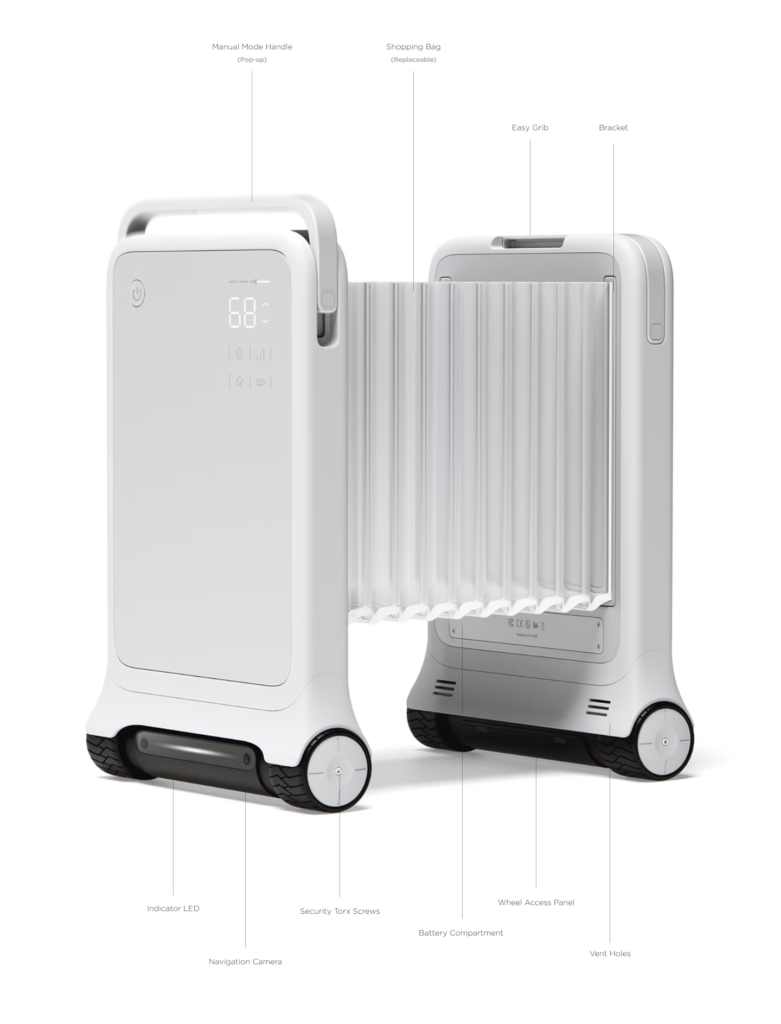
LEVION’s detailing shows that the project is not only about appearance. The pop-up manual handle gives users a backup when they want direct control. The replaceable shopping bag makes the product easier to clean, maintain, brand, or update. Other details, such as the wheel access panel, battery compartment, vent holes, security screws, navigation camera, and indicator LED, suggest real-world product thinking. These features make the concept feel more believable because they address repair, safety, maintenance, and daily store operation.

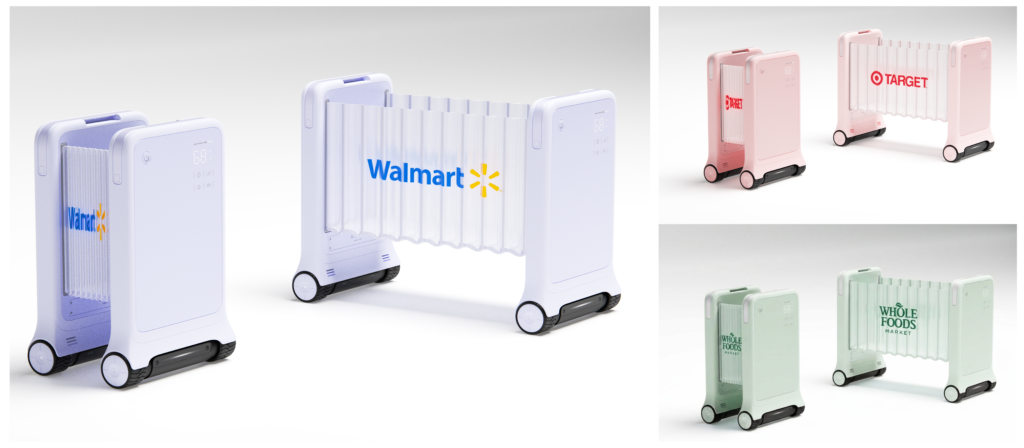
In retail, a product must survive repeated use. LEVION appears to understand that. LEVION also has strong potential as a branding platform. The cart can be customised with brand-specific colours and graphics while keeping the main product architecture consistent. The interchangeable centre bag can display store logos, promotions, campaigns, or seasonal messages. This turns the cart into more than a carrying tool. It becomes mobile retail media.
The white, tone-on-tone, and clean CMF direction gives the product a premium and modern character. It could fit naturally into supermarkets, malls, outlets, duty-free stores, and even luxury retail spaces..
Final Thoughts: A Smarter Cart With a Human Purpose
LEVION’s strength is that it treats the shopping cart as part of a larger user experience. It is not only about storage. It is about effort, independence, store efficiency, brand visibility, and the emotional feel of shopping. Jay Yeom takes an everyday object and gives it a more thoughtful future. By combining autonomy, expandable capacity, clear controls, and clean product design, LEVION turns a familiar retail tool into a quiet companion.
It is not simply a smarter cart. It is a proposal for a more effortless, accessible, and human shopping experience.
About the Designer
Jay Yeom is a South Korean industrial designer currently based in Los Angeles. Born and raised in South Korea, his design approach is shaped by a deep belief that design should go beyond creating beautiful objects. For him, design is a way to add value to people’s everyday lives through balanced forms, thoughtful details, and intuitive experiences. By observing the world from fresh perspectives and exploring different possibilities, Yeom aims to create meaningful products that carefully balance functionality and aesthetics. His work reflects a quiet sensitivity toward human needs, practical use, and visual harmony.
Beyond his design philosophy, Yeom also believes that becoming a great designer begins with becoming a good person. This personal belief guides his attitude toward design and life, encouraging him to remain kind, considerate, and humble in the way he works and connects with others.